


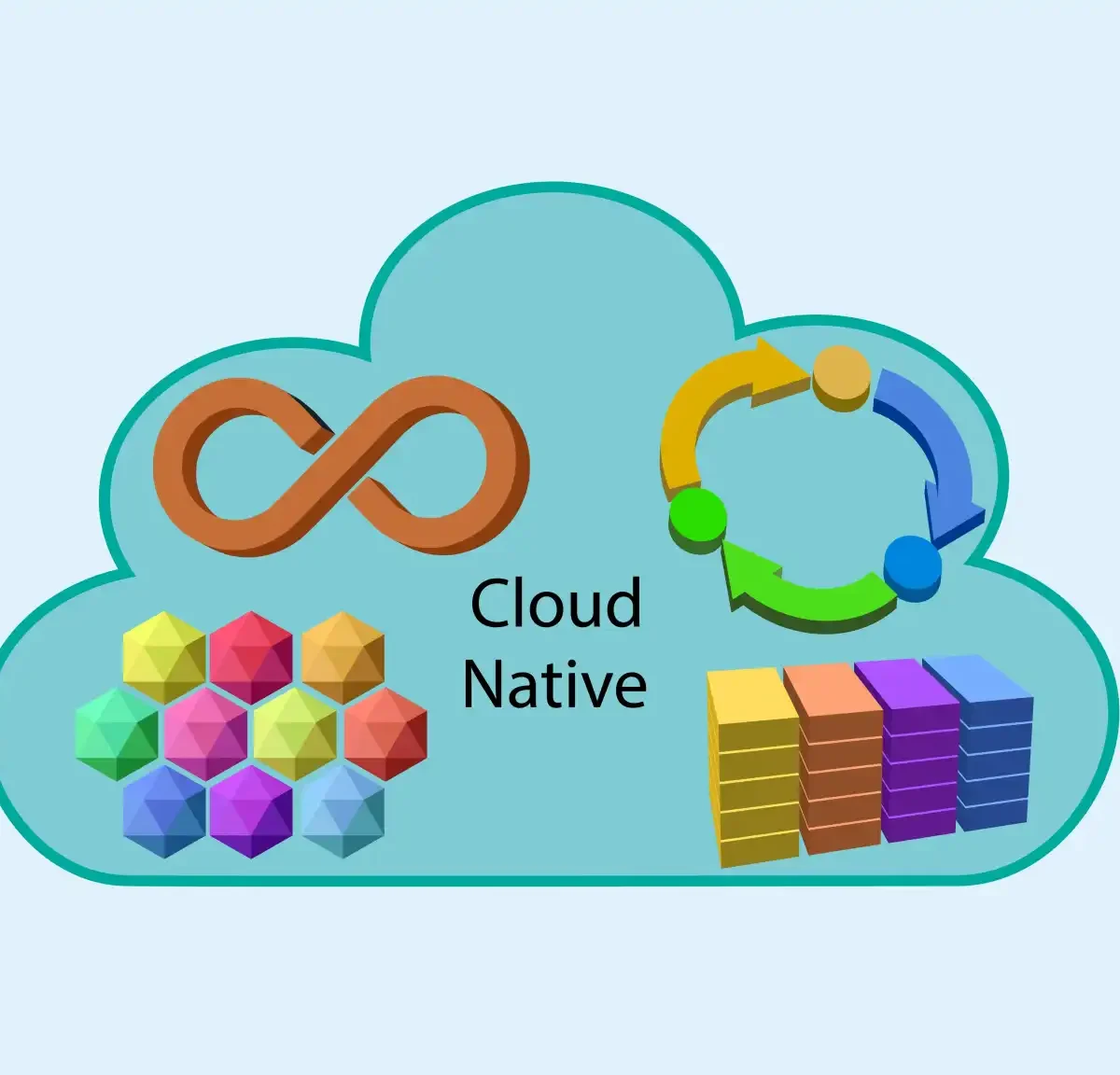
In today’s digital-first world, applications must be fast, reliable, and capable of handling millions of users without slowing down. Traditional monolithic systems struggle to meet these demands. That’s why businesses are rapidly shifting toward cloud-native architecture — a modern approach to building applications that are scalable, resilient, and future-ready.
In this article, we’ll explore what cloud-native architecture is, why it matters, and how you can build scalable applications using cloud-native principles.

Getting started with coding
Last Updated: 2023-12-14
Get your programming skills better by learning the basics of most common an
What Is Cloud-Native Architecture?
Cloud-native architecture is a software design approach that leverages cloud computing capabilities to build and run applications. Instead of relying on a single, tightly coupled system, cloud-native applications are built using modular, independent components.
These applications are designed to:
-
Scale automatically
-
Recover from failures
-
Deploy faster
-
Adapt to changing workloads
Cloud-native apps are optimized for modern cloud platforms such as AWS, Microsoft Azure, and Google Cloud.
Core Principles of Cloud-Native Architecture
1. Microservices-Based Design
Instead of building one large application, cloud-native systems use microservices. Each microservice handles a specific business function and runs independently.
Benefits:
-
Easier scaling
-
Faster deployments
-
Better fault isolation
-
Independent development teams
For example, an e-commerce app may have separate services for user management, payments, inventory, and orders.
2. Containerization
Containers package an application with all its dependencies, ensuring it runs consistently across environments.
Popular tools:
-
Docker
-
Podman
Benefits:
-
Faster deployments
-
Environment consistency
-
Lightweight and portable
Containers make applications easy to move between development, testing, and production environments.
3. Orchestration with Kubernetes
Kubernetes manages and automates container deployment, scaling, and operations.
Key features:
-
Auto-scaling
-
Self-healing
-
Load balancing
-
Rolling updates
Kubernetes is the backbone of modern cloud-native infrastructure.
4. API-First Development
Cloud-native applications communicate using APIs.
Benefits:
-
Easy integration
-
Flexible architecture
-
Supports microservices communication
-
Enables frontend and backend separation
REST and GraphQL are commonly used for building APIs.
5. DevOps and CI/CD Automation
Cloud-native development relies on automation.
Key components:
-
Continuous Integration (CI)
-
Continuous Deployment (CD)
-
Automated testing
-
Infrastructure as Code
Popular Cloud-Native Tech Stack
-
Frontend: React, Vue
-
Backend: Node.js, Go, Python, Java
-
Containers: Docker
-
Orchestration: Kubernetes
-
Cloud: AWS, Azure, GCP
-
CI/CD: GitHub Actions, Jenkins
-
Monitoring: Prometheus, Grafana
Final Thoughts
Cloud-native architecture is no longer optional — it’s essential. As applications grow in complexity and scale, traditional systems simply can’t keep up.
By adopting microservices, containers, Kubernetes, and DevOps automation, businesses can build applications that are resilient, scalable, and ready for the future.
Cloud-native is not just a technology shift — it’s a mindset shift. And the sooner you adopt it, the faster your applications will grow.